
Why Riding Style Matters More Than Specs

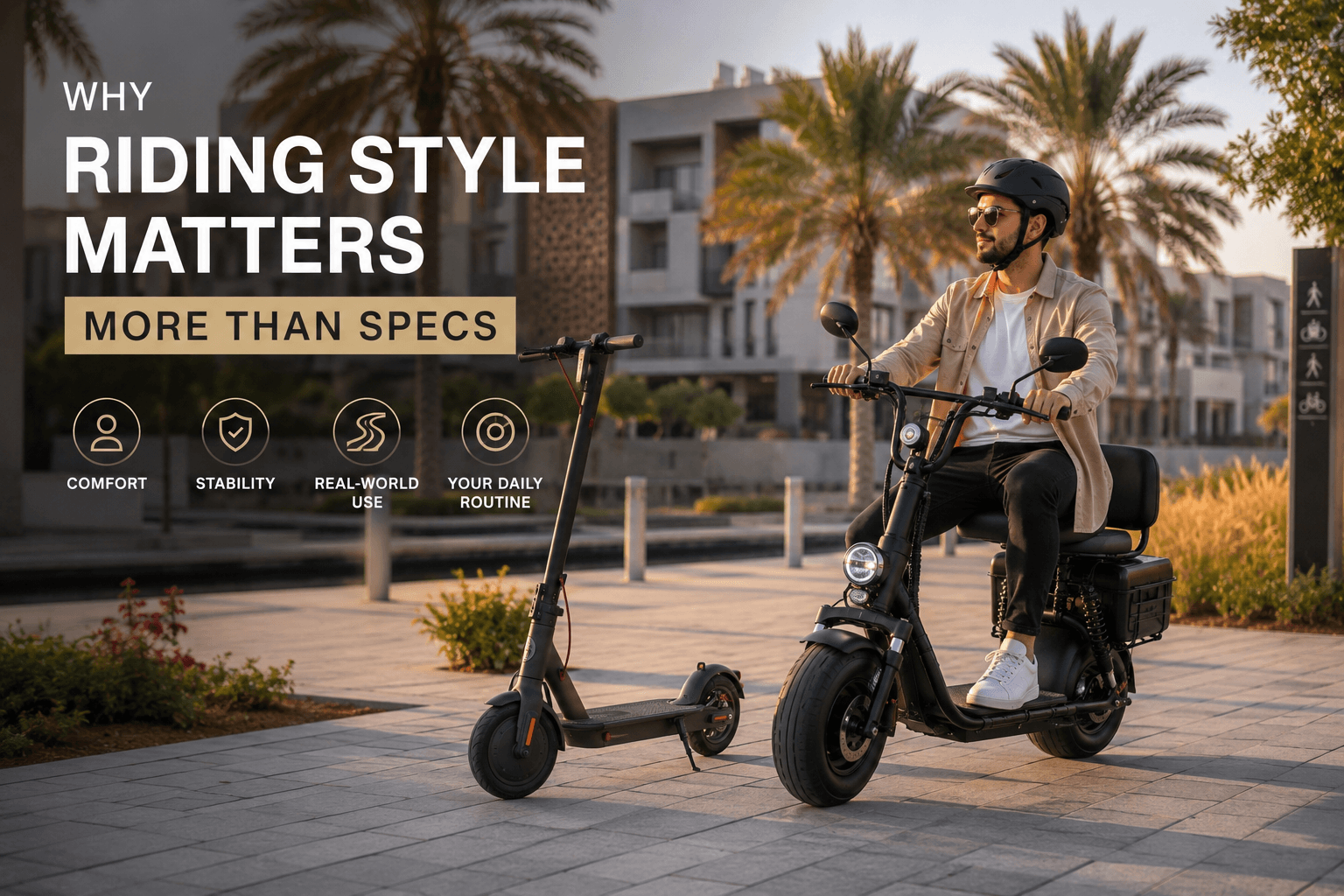
Specs tell you what a scooter can do. Riding style tells you how it will actually feel during everyday use.
When people compare electric scooters, they often begin with numbers.
Top speed. Range. Motor wattage. Battery size. Charging time.
These specs matter. They help you understand what a scooter is capable of, and they make it easier to compare one model against another. But specs alone do not always tell you whether a scooter will actually feel right for your daily life.
A scooter can look impressive on paper and still feel wrong for your routine. It might be fast, but uncomfortable. It might have strong power, but feel too large for your usual riding spaces. It might offer good range, but not the kind of stability or comfort you want for everyday use.
That is why riding style matters.
The best electric scooter is not always the one with the biggest numbers. It is the one that matches how you ride, where you ride, how often you ride, and what kind of experience you want every day.
Why Daily Use Changes What Matters
A scooter that feels exciting for a short ride may not always feel ideal for daily use.
During a quick test ride, many riders notice speed first. They may also notice acceleration, display features, or the general look of the scooter. But after several weeks of regular riding, other things become more important.
Comfort starts to matter. Stability starts to matter. How the scooter handles bumps, turns, and longer rides becomes more noticeable. The riding posture, tire feel, braking confidence, and general smoothness all begin affecting the ownership experience.
This is especially true for riders using electric scooters as part of everyday transportation.
If you ride often, small comfort details stop feeling small. Road vibration, standing posture, deck space, tire response, and suspension quality can all influence whether the scooter feels enjoyable or tiring over time.
That is why daily riders often think differently from first-time shoppers. Beginners may focus on numbers. Experienced riders usually care more about the full ride experience.
Comfort Is Not a Luxury Feature
Comfort is sometimes treated as a secondary detail, but for daily riding it can be one of the most important factors.
A comfortable scooter is easier to use consistently. It feels more natural during longer rides, more stable during everyday movement, and less tiring over time.
Comfort can come from several design elements working together: suspension, tire size, seating, deck width, handlebar position, and overall frame geometry. No single feature determines the full experience, but together they shape how relaxed or harsh the ride feels.
This is especially important for commuter-style scooters.
A rider using a scooter for short errands may be comfortable with something compact and lightweight. But someone riding more frequently may prefer a scooter that feels smoother, more stable, and more relaxed. In that case, comfort is not just a nice extra — it becomes part of what makes the scooter practical.
For daily riders, comfort often determines whether the scooter becomes something they actually use regularly or something that stays parked after the excitement wears off.
Stability Builds Confidence
Riding style also affects confidence.
A scooter that feels stable gives the rider a stronger sense of control. This matters for beginners, but it also matters for experienced riders who use their scooters frequently.
Stability is influenced by many factors, including tire size, deck width, weight distribution, frame design, and suspension. When these elements work well together, the scooter feels more predictable. It becomes easier to ride calmly, especially in everyday conditions.
A scooter that feels unstable or overly sensitive can make the rider tense. Even if the specs are impressive, the ride may feel less enjoyable because the rider never fully relaxes.
This is why stability should not be ignored when choosing a scooter.
For many riders, confidence is more valuable than maximum speed. A stable scooter may feel slower on paper, but better in real life because it gives the rider more control and comfort during normal use.
Different Riders Need Different Ride Styles
There is no single riding style that works best for everyone.
Some riders want portability. They need a scooter that is compact, easy to store, and simple to move around. For them, lightweight design may be more important than maximum comfort.
Other riders want smooth commuting. They may prefer larger tires, seating, suspension, and a more relaxed riding position. For them, comfort and stability may matter more than compactness.
Some riders want recreational fun. Their priority may be movement, outdoor enjoyment, and a playful riding experience rather than commuting efficiency.
Others want practical short-distance mobility. They may care most about convenience, easy parking, and quick local transportation.
All of these riders are valid. But they should not all choose the same scooter.
That is the point: the right scooter depends on the rider’s lifestyle, not just the spec sheet.
Why “Best Scooter” Depends on Context
People often ask, “What is the best electric scooter?”
A better question is:
Best for what?
Best for short errands? Best for commuting? Best for comfort? Best for portability? Best for longer rides? Best for beginners? Best for recreational use?
Each answer can lead to a different scooter.
This is why buying based only on specs can lead to the wrong choice. A scooter with strong performance may not be the best choice for someone who needs something easy to store. A compact scooter may not be ideal for someone who wants a smoother ride over longer distances. A recreational ride may not suit someone looking for daily commuting.
Context matters.
The best scooter is the one that fits the rider’s real use-case. That means thinking about where you ride, how often you ride, how long your rides usually are, and what kind of experience you want.
Specs Should Support the Ride, Not Replace It
This does not mean specs are unimportant.
They are still useful. Range, motor power, battery capacity, tire size, and charging time all matter. But they should be understood as part of the bigger picture.
Specs should support your riding style.
If you ride longer distances, range matters more. If you ride in areas where comfort is important, suspension and tires matter more. If you need easier storage, size and weight matter more. If you want relaxed commuting, seating and stability may matter more.
The problem is not using specs. The problem is treating specs as the whole decision.
A smarter approach is to begin with your riding style, then use specs to confirm whether the scooter supports it.
That order makes the decision much clearer.
A Better Way to Choose
Instead of asking only, “Which scooter has the best specs?” start with practical questions.
How often will you ride?
Where will you usually ride?
Do you care more about portability or comfort?
Will you use the scooter for errands, commuting, or recreation?
Do you prefer standing or seated riding?
How important is stability?
Do you need something compact, or something more relaxed for daily use?
Once those questions are clear, specifications become easier to interpret.
A rider who values comfort will look at suspension, tire size, seat design, and ride posture differently. A rider who values portability will care more about size, weight, and storage. A rider focused on daily commuting will think about range, stability, and long-term comfort.
The same specs can mean different things depending on the rider.
That is why riding style should come first.
How This Helps First-Time Buyers
For first-time buyers, this mindset is especially useful.
It is easy to be drawn toward the scooter with the highest speed or strongest headline feature. But the better long-term choice is usually the one that feels right for your actual routine.
If you are still early in the decision process, it helps to begin with the basics: your riding needs, comfort expectations, daily habits, and preferred use-case.
For a practical step-by-step overview, you can also read Leaders Pro’s guide on choosing your first electric scooter: https://leaderspro.ae/choose-your-first-electric-scooter/
That guide can help you think through the buying process more clearly once you understand why riding style matters.
The Real Goal: A Scooter You’ll Actually Use
The best scooter is not always the most powerful scooter.
It is the scooter you feel comfortable using regularly. The one that fits your routine. The one that feels natural when you ride it. The one that makes short trips easier, daily movement smoother, or recreational riding more enjoyable.
Specs can help you compare options, but riding style helps you choose wisely.
When your scooter matches the way you actually live and ride, electric mobility becomes more than a product. It becomes part of your routine.
That is why riding style matters more than specs.


